

Gray does not grow in slowly. It just looks that way, because the moment it clears your part line it reads as a stripe against the rest of your color. That is the real problem the best root touch-up for gray hair has to solve: the calendar between salon visits rarely matches the calendar your roots are working on. Most people who color regularly get maybe four to six weeks before the line becomes obvious, and life does not always cooperate with that window.
I spent eleven years behind the chair fixing what happened in that gap. Some of it was harmless. Some of it turned a twenty-minute retouch into a two-hour correction. The difference almost always came down to which product someone reached for, and whether they told their colorist about it before the next appointment started.
This is a rundown of what actually works between visits: temporary sprays and powders, touch-up sticks, at-home demi and permanent kits, and the salon's own root-only service. Each one has a real trade-off. None of them are free lunches, and the right pick usually changes depending on how close you are to your next salon date.
LA adds its own wrinkle. A dry, hot afternoon in the Valley behaves differently on scalp product than a humid June evening near the coast, and clients who commute or work out midday tend to see surface product move sooner than clients who mostly stay in air conditioning. None of that changes which product is safest before a color appointment. It just means the same spray that looked flawless first thing in the morning might need a quick touch-up by late afternoon.
Temporary Root Sprays and Powders
Sprays and powders sit on top of the hair shaft. They do not penetrate the cuticle, which is exactly why they are the safest option in this whole list. One shampoo and they are gone, taking any color mismatch with them.
A root spray gives you fast, even coverage across a wide regrowth band. That speed comes with a catch: sprays can look stiff or slightly matte compared to the shine of the rest of your hair, and they are the product most likely to transfer onto a pillowcase, a dark collar, or your hands if you touch your part before it sets.
Powders trade some of that speed for a more natural finish. Color Wow's Root Cover Up is a pressed mineral powder applied with a brush, and Color Wow's own product page markets it specifically as a less sticky, less waxy alternative to root sprays that can also blend gray without any peroxide involved. A powder takes a steadier hand than a spray. You are painting the part line rather than misting a whole section.
Both formats have one real weakness: buildup. Use either one for weeks on end without washing it out fully, and it accumulates along the scalp. That residue has to be clarified before your colorist can apply anything new and expect it to process evenly, which is one more reason to keep an eye on the shampoo you use in between (our piece on shampoo ingredients that build up on color-treated hair covers which cleansers work against you here).
Root Touch-Up Sticks and Pens
A touch-up stick is a spray or powder shrunk down to a single point of contact. Think of it as a concealer for hair: a small, waxy or pigmented tip you drag along the part or press into a stray gray strand near the temple.
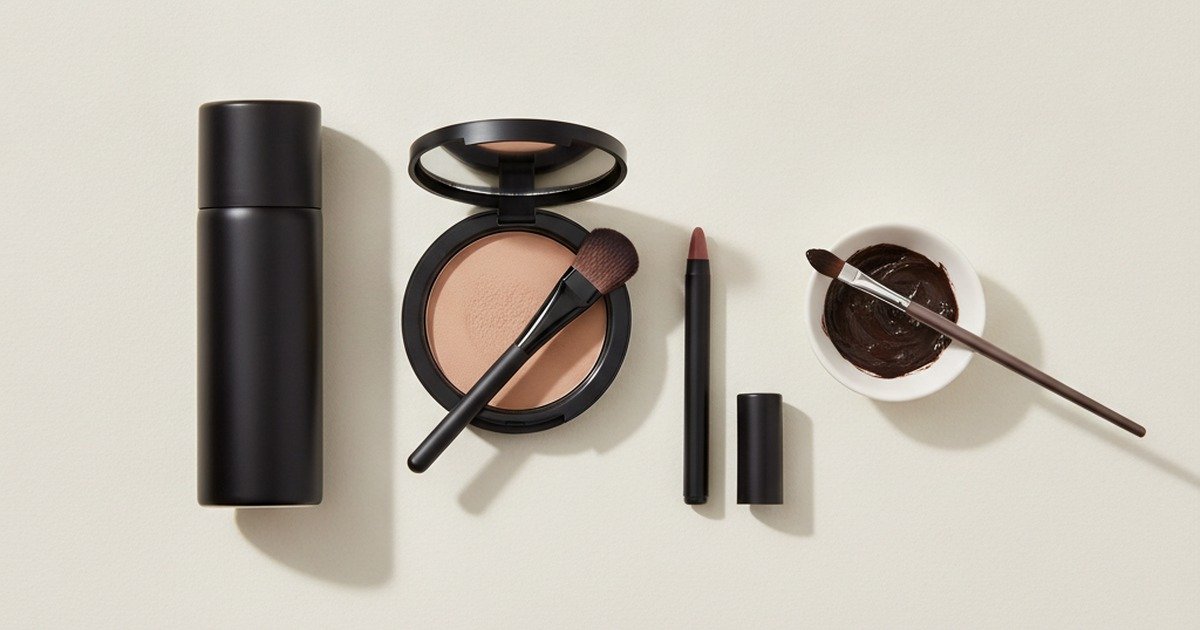
Sticks solve a narrower problem than sprays do. If your gray comes in sparse, scattered along the part instead of one solid band, a stick lets you spot-treat in seconds without touching hair you do not need to color. The people I saw get the most out of one had a defined part and a handful of gray strands framing the face, the kind that show up first around the temples for most people.
You tap along just that strip without disturbing the color on either side of it. Try to cover a full band of regrowth with one, though, and you will be there a while, working strand by strand the whole time.
They wash out the same way sprays and powders do, with a single shampoo, and carry the same low-risk profile before a salon appointment. The trade is speed for precision.
Pick the tool that matches how your gray actually grows in; convenience is the wrong tiebreaker.
At-Home Demi- or Permanent Root Kits
This is where the trade-offs get real. A demi-permanent or permanent root kit deposits actual pigment into the hair shaft, which is why the color lasts for weeks. dpHUE's product page says its Root Touch-Up Kit for Resistant Grays is a permanent formula that processes in 45 minutes, contains a very low amount of ammonia, and ships with two applications per kit. Madison Reed's product page markets its Root Perfection kit as a permanent, ammonia-free formula that covers gray roots in 10 minutes.
Brands sell these kits on the promise of buying you extra weeks between salon visits. Neither product page states a number, so treat that promise as marketing shorthand, not a tested figure.
Here is what I had to undo more than anything else in this category: banding. When a permanent or demi color meets hair that a salon already lightened or toned, the two sections have different porosity. Porosity is how open the hair's outer cuticle is, and it changes how fast and how dark color takes. New regrowth grabs color differently than previously processed lengths, so the line where they meet can show up as a visible demarcation once both grow out a little further.
The other thing I saw constantly was "hot roots": color at the regrowth that reads warmer or brighter than the rest of the head. Permanent color processes faster and warmer on virgin, unprocessed hair than it does on hair that has already been lightened. Repeat an at-home permanent touch-up a few times without a colorist rebalancing the line, and correcting it stops being a quick fix. It becomes a full color correction appointment, the kind that shows up in a color correction cost guide.
One more thing to check on the box before you buy: metallic salts. These show up in some older-style progressive dyes and gradual gray-coverage combs, and colorists and salon-industry sources report they can react unpredictably with the peroxide and lightening chemicals your colorist uses for bleach, highlights, or a fresh color service, sometimes shifting the resulting tone toward green, red, or purple, or leaving hair more brittle than expected, per a SalonGeek professional forum discussion. Read the ingredient list. If the box mentions metallic salts, or describes itself as a "progressive" or "gradual" gray coverage product, skip it, or at minimum tell your colorist exactly what you used before they touch a bottle of developer.
Salon Root-Retouch Services
A root-retouch is exactly what it sounds like: color applied only to the new growth at the scalp, without reapplying the full length. It is faster than a full color service and it is the option least likely to create the banding or buildup problems above, because it is the same formula and the same hands each time.
Frequency runs roughly every four to six weeks for most people covering gray with single-process color, a range that tracks with how visibly regrowth shows up at the part line. It is a widely repeated salon norm rather than a studied figure. Some people with finer or slower-growing hair stretch it longer; some with fast growth or high-contrast gray need it sooner.
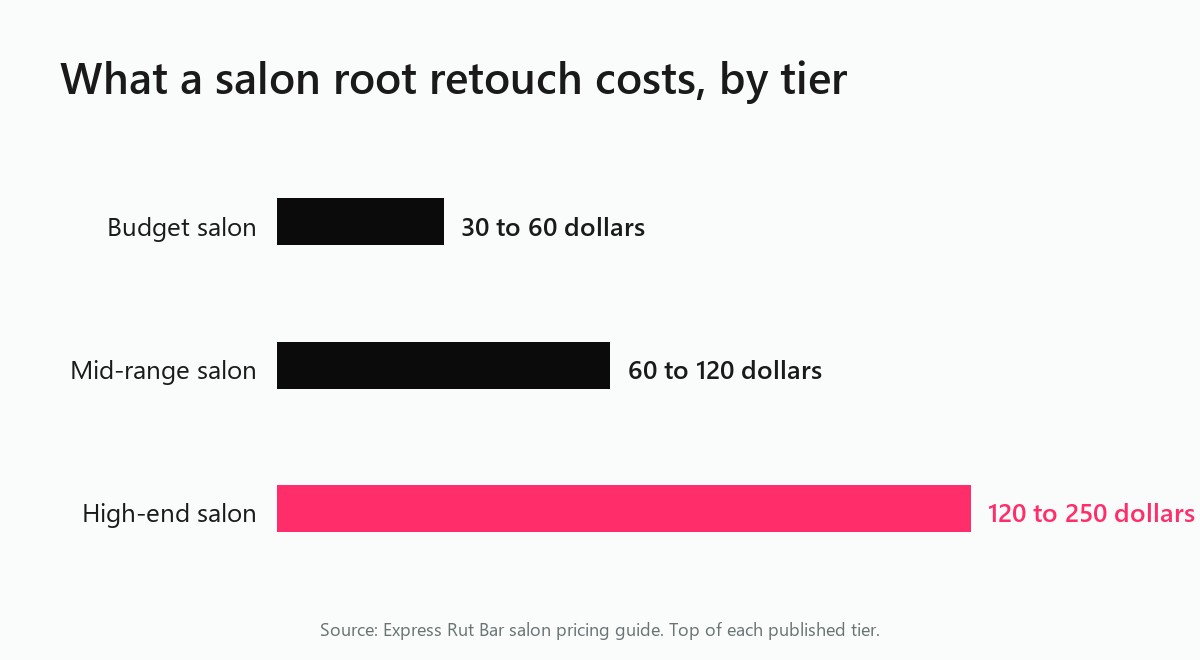
Pricing varies more than most people expect, and it tracks the salon tier more than the city. One salon-industry pricing breakdown puts a root-only retouch at roughly $30 to $60 at a budget salon, $60 to $120 at a mid-range salon, and $120 to $250 or more with a high-end colorist. It's a directional figure from one pricing breakdown. It lines up with what I quoted clients across Silver Lake, Los Feliz, and WeHo for years. Ask which tier your salon falls into before you book, so the price on your ticket does not come as a surprise.
Booking a root-retouch beats another round of DIY when the line between your natural gray and your last color starts showing texture as well as color, meaning you can feel a ridge where two different processed sections meet. That texture difference is porosity doing its work, and it is the clearest sign a colorist needs to even things out. If you have not settled on gray blending versus full coverage as your baseline service, that decision shapes how often this retouch makes sense in the first place, and it is worth working out with your colorist before you build a maintenance routine around either one.
What to Use (and Skip) the Week Before Your Appointment
Michelle Cleveland, owner of Hair Addict Salon, told SheFinds that she steers clients away from permanent home color and DIY lightening kits before a salon visit, because a bad result becomes an expensive in-salon fix if it is not applied correctly. Her recommended alternative is a semi-permanent color with little to no ammonia, or gentler surface options like a color-depositing shampoo or a root powder, because a professional can remove those far more easily, and less expensively, than they can correct a permanent color gone wrong.
That maps cleanly onto everything above. Safe the week before an appointment: root sprays, root powders, touch-up sticks, color-depositing shampoo, and a semi-permanent color with little to no ammonia, the option Cleveland names first. The surface products rinse away in a single shampoo; semi-permanent color fades out over several washes but does not carry the same correction risk as a permanent formula. Risky the week before an appointment: any permanent or demi box color, and anything containing metallic salts, since your colorist needs to know exactly what is already on your hair before they mix a formula or reach for a lightener.
Say something even if it feels like a small detail. "I used a root spray twice last week" takes five seconds to mention and tells your colorist there is nothing chemical to account for. "I used a drugstore permanent kit ten days ago" changes how they approach the whole appointment, from the strand test they run to the formula they choose.
Our checklist for the two weeks before a color appointment covers the fuller list of what to handle, and it is worth reading through before you book. It also helps to walk in with a short list of questions worth asking about your root maintenance routine, so your colorist can plan the appointment around what you have actually been using.