If you typed "what are babylights" into a search bar, you probably already sat through a consultation and heard a number that surprised you, or you heard a colorist use the word and nodded along without really knowing what it meant. Both reactions are common, because babylights get mentioned constantly in salons and rarely get explained.
Babylights are a foiling technique built around an extremely fine, tightly placed weave, and that fineness is exactly what drives the extra time and the extra cost. Once you see how the weave works, the developer choice, the appointment length, and the price all follow the same logic.
The Fine Weave That Defines Babylights
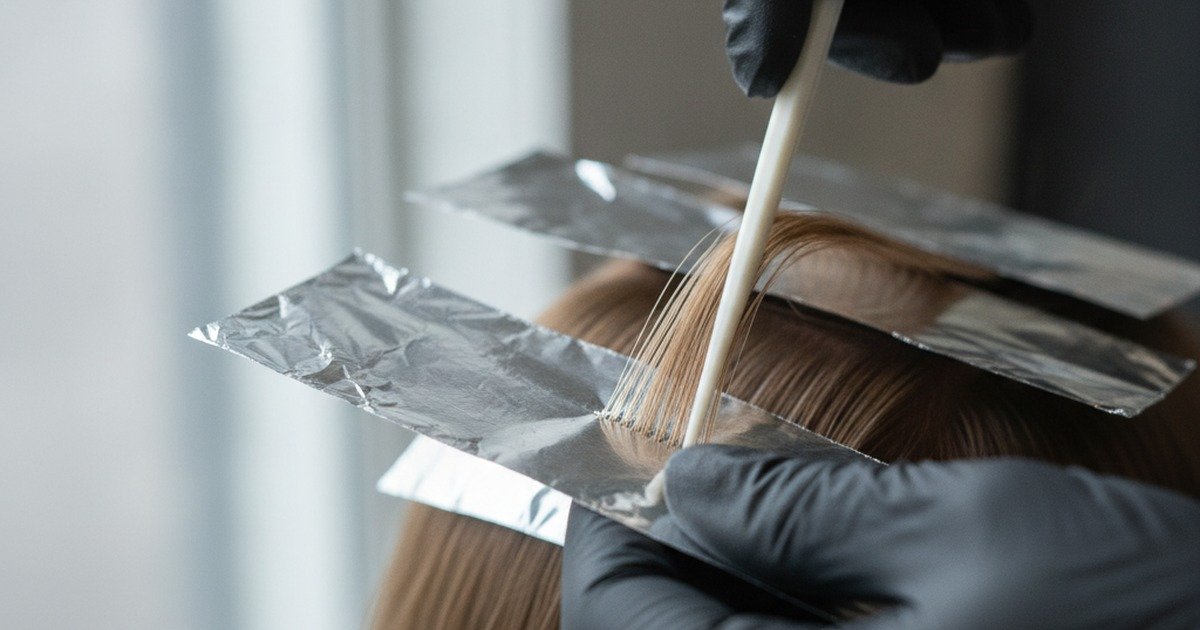
Every foiling technique starts with a weave: a colorist separates a section of hair into thin, alternating strands, lifts a chosen portion onto foil, and leaves the rest of the section untouched so some of the natural or previously colored hair still shows through. What makes babylights their own category is how fine and how close together those strands are woven. A standard highlight weave pulls out sections a colorist can pick up easily between two fingers.
A babylights weave pulls out sections closer to individual hairs, packed back to back, section after section across the head. Keune's professional color education puts the standard plainly: if you can count the individual hairs inside a woven section, that section is fine enough to qualify as babylights, and if you can't, it's a highlight instead.
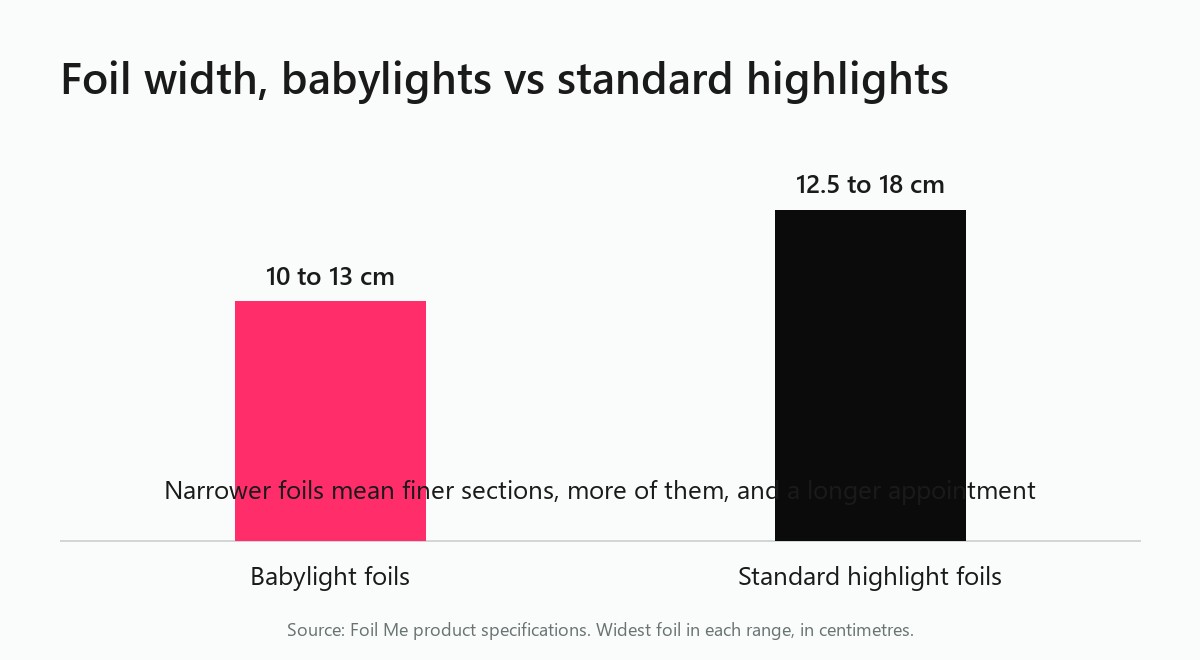
That difference shows up in the tools too. Standard highlight foils commonly run in the neighborhood of 12.5 to 18 centimeters wide, sized to hold a thicker section. The narrower foils colorists reach for on a babylights service, roughly 10 to 13 centimeters, exist because the sections themselves are smaller and packed tighter, according to Foil Me's professional foil sizing guide. A colorist working through a full head this way places noticeably more foils than a standard highlight service uses, simply because each foil is holding less hair.
The visual payoff is a softer, more graduated result. L'Oreal Paris USA's own guide to babylights describes the technique as hand-painted or foiled sections applied to ultra-thin portions of hair, producing lighter, more natural-looking dimension than the broader contrast of traditional foil highlights. Balayage, hand-painted without foil at all, sits at a different point on that same spectrum.
Why Colorists Reach for a Lower-Volume Developer
Developer is the peroxide-based cream or liquid mixed with hair color to open the hair's cuticle (the outer layer of the hair shaft) so lightening or deposit can happen. Think of the cuticle as a set of shingles on a roof: developer lifts those shingles just enough for color or lightener to get underneath and do its work.
It comes in different strengths, called volumes, and a higher volume lifts hair faster and further. On a standard full-foil highlight service, where a colorist needs a thicker section to lift several levels within a set processing window, a stronger developer usually earns its place. Push too much volume onto a section that doesn't need it, though, and you risk lifting past the target shade or leaving the hair more fragile than the result called for.
Babylights change that math. Because each section is so thin, it processes faster than a thick section would at the same developer strength. That's why colorists typically reach for a lower-volume developer, often in the 10 to 20 volume range: a thin, well-separated strand takes on lightener quickly and doesn't need the extra push a bulkier section would. Consumer guides, including hair.com's babylights guide, describe the result as gentler on the hair per strand than a full foil highlight set, even though the total appointment runs longer because there are more sections to place.
Why a Full Service Runs Two to Four Hours
A full head of babylights commonly takes two to four hours, depending on hair length, density, and how much lift the client wants, per hair.com's own consumer guide. That range holds up across independently published salon service pages as well, which is a rare point of agreement for a service where pricing and technique language vary so much by market.
The time comes from arithmetic a colorist controls section by section, not from product sitting on the hair any longer than usual. A standard highlight service separates the head into a set number of wider sections and foils each one. A babylights service separates the same head into far more, far thinner sections, and every one of those needs to be woven, foiled, and eventually rinsed and toned on its own timeline.
More foils means more time at the weaving stage, more time checking each section for even lift, and more time removing foils in sequence at the end. A colorist working a babylights service also has more checkpoints along the way: opening a handful of foils partway through processing to see how far the lightener has traveled, then deciding whether the rest need more time or are ready to rinse. That checking step protects against uneven results, but it adds real minutes across a full head of tightly packed foils.
What Babylights Cost, and Why the Range Is Wide
Pricing for babylights varies by market and by colorist experience, which makes a single number close to useless for budgeting. Yelp's August 2026 cost data puts the low end of the range at roughly $70 to $145 for a full head, with pricing climbing well beyond that at higher-tier salons and larger markets. That spread exists because you are paying for foil count and appointment time, not a fixed volume of product.
Los Angeles pricing follows the same logic: what drives a quote up or down is foil count, hair length and density, the developer and toner used, and how much correction your base needs before babylights will even show up properly. If your base needs correcting first, our color correction cost guide for LA walks through that last variable in detail, including what happens when a base gets pushed too far, too fast, in a single visit.
Who Babylights Genuinely Suit
Fine hair benefits from babylights more than almost any other hair type, and matching a colorist to your hair type matters here, because the technique's whole design point is subtlety. A thick foil section on fine hair can look heavy and stripe-like once it grows out, while a fine, densely packed weave settles into hair that does not have much natural texture to soften a harder line.
Natural blondes wanting more dimension are another strong match. Because a natural blonde base is already light, babylights can add contrast and movement without asking for dramatic lift, which keeps processing time and developer strength on the gentler end described earlier.
First-time color clients also tend to do well starting here. A babylights service introduces a colorist to your hair's porosity (how readily hair absorbs and releases moisture and color) and its natural undertone gradually, through many small sections, which limits how much can go visibly wrong on a first visit.
Who Should Skip Babylights
The clearest mismatch is a very dark base looking for dramatic lightening. Babylights lighten a small amount of hair per section, which is exactly what makes the result look natural, but it also means the technique cannot move a dark base up multiple levels of lift in a single visit. Someone starting from a deep brunette or black base and wanting a noticeably lighter overall look needs a lightening plan first, since babylights placed on top of an under-lifted dark base will barely register.
The same lift-math logic shows up in gray coverage work. How gray percentage changes the lift plan, laid out in our guide to gray blending versus full coverage color, runs on the same principle as dark-to-light babylights: how much lift is realistic in one appointment depends on where you're starting and how far you're trying to move it. A colorist who is honest with you about this will often recommend a lightening service first and babylights as a finishing step later, keeping the two out of one long, higher-risk appointment.
Babylights vs. Standard Foils vs. Balayage
All three techniques lighten hair to create dimension, but they differ in application method, contrast level, and how they grow out.
Standard foil highlights use thicker, wider-spaced sections wrapped in foil, which creates more visible, higher-contrast pieces of color. They suit clients chasing noticeable brightness and bold dimension. Because the sections are larger, a standard highlight service typically uses fewer, wider foils and takes less total time than a full babylights service.
Babylights use the same foil-wrapping method as standard highlights, applied to far thinner, more tightly woven sections, which produces low, soft contrast, per L'Oreal Paris USA's earlier definition.
Balayage skips foil altogether. A colorist hand-paints lightener directly onto the surface of chosen sections, freehand, which places contrast where sunlight would naturally hit hair and creates a softer, more gradual grow-out than foiled techniques generally allow, per Keune's technique glossary cited above. For the grow-out comparison in full depth, read how balayage stacks up against foiled techniques in our balayage-versus-highlights guide.
The short version here is that balayage and babylights can look similar from a distance, soft and low in contrast at the root. They get there through different mechanics, though, and a colorist trained in one technique needs separate practice to master the other. Freehand painting builds skill around how a brush distributes lightener across the hair's surface. Weaving fine, even sections under foil builds a completely different set of hand skills, and neither one automatically transfers to the other.
How to Tell From a Portfolio Whether a Colorist Can Execute It
California licensing is a useful floor for this conversation, not proof of babylights-specific skill. The California Board of Barbering and Cosmetology's own FAQ confirms the requirement: 1,000 clock hours of training at a Board-approved cosmetology school before a colorist can even sit the state licensing exam. That requirement proves general competency in cosmetology. No state exam or license category certifies a colorist specifically in babylights, so the license tells you they cleared a baseline, and the portfolio is what tells you whether they can actually do this.
What to look for is specific to babylights, and general portfolio literacy only gets you partway there. General before-and-after evaluation is laid out in our piece on reading a colorist's Instagram before you book. From there, look for details unique to this technique. Root regrowth should look even and soft, since a fine, tightly packed weave grows out more gradually than a thick foil section does.
Any visible boundary where a lightened section meets untouched hair should blend softly into the surrounding strands. The graduation from root to end should look like something built up over a season in the sun.
One consultation question does a lot of work here: ask to see close-up, unfiltered photos of finished babylights work. Wide shots flatter the overall color from a distance and hide the fine detail that actually shows how well the weave was placed. A colorist confident in this technique will already have those photos ready. A few more questions worth raising before any foil service, babylights included, are listed in our pre-booking questions guide.